When a building begins to show signs of settlement, property owners are often presented with Push Pier or Foam Injection (Polyurethane Lifting).
Although both methods aim to address foundation movement, they work very differently and are suited for different conditions. Choosing the right method depends on understanding the root cause of the settlement.
Understanding the Core Difference
Push Pier (Foundation Jacking)
Push Pier/Foundation Jacking are steel piers hydraulically driven deep into the ground until they reach stable load-bearing soil or bedrock. The building’s weight is then transferred from weak surface soil to these deeper, stable layers. Push Pier address the cause of settlement by bypassing unstable soil altogether.
Ideally for:
- Ongoing or significant foundation settlement
- Weak or compressible surface soils
- Heavy structures
- Long-term structural stabilisation
Foam Injection (Polyurethane Lifting)
Foam injection involves pumping expanding polyurethane beneath a slab or foundation. As the foam expands, it fills voids and lifts the structure by compacting the surrounding soil. It does not transfer loads to deeper levels, but it improves support by densifying soil.
Best suited for:
- Minor slab settlement
- Void filling beneath concrete slabs
- Lightweight structures
- Situations where soil is mostly stable but slightly displaced
Stabilise or Lift?
One of the biggest misconceptions is that lifting could solve the problem.
If settlement is caused by weak or highly compressible soil, injecting foam may temporarily lift the structure, but if the underlying soil continues to move, the problem can return.
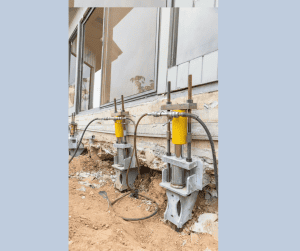 Push Pier / Foundation Jacking | 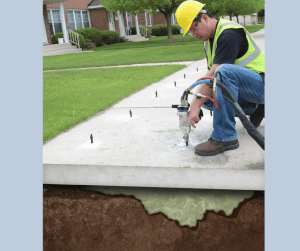 Foam Injections |
|---|---|
| Stops further settlement | Settlement is limited to shallow voids |
| Transfer structural load to competent soil or bedrock | The issue is erosion or washout |
| Provide measurable load bearing capacity | The structure itself is structurally sounds |
Load Capacity Matters
Heavy buildings require engineered load transfer.
Push pier is installed until they reach refusal or design load capacity, meaning they are verified to support the structure. This makes them suitable for residents, commercial buildings, and industrial facilities.
Foam injection does not provide the same structural load verification. It improves soil conditions but does not create a deep foundation system.
Choosing the Smarter Long-Term Option
Before deciding between push piers or foam injection, engineers must assess the soil condition, extent and pattern of settlement, soil movement, structural weight and load distribution.
If the problem is deep soil instability, strengthening at the surface will not resolve it and push pier would provide long-term stabilisation.
If the issue is shallow voids, installing deep piers may be excessive, meanwhile foam injection is minimal disturbance and would be a quick solution.
Proper assessment ensures the solution is proportional, effective, and durable.