Every building tells a story. Cracks in a slab, water intrusion, or premature deterioration are often symptoms of deeper issues. Construction forensics is the process of uncovering those causes by investigating why structures fail, age faster than expected, or don’t perform as intended. It is an engineering discipline that combines technical expertise with investigative methods to identify the root of problems and prevent them from recurring.
What is Construction Forensics?
Construction forensics is the systematic study of defects, failures, or performance issues in buildings and infrastructure. It involves examining design, materials, workmanship, and site conditions to piece together why a problem occurred. Much like a medical diagnosis, the goal is not only to address the symptoms, but to understand the underlying cause.
Investigations can cover a wide range of issues:
- Structural Cracks
- Settlement
- Spalling Concrete
- Leaking Façades
- Corrosion of Reinforcement
- Complete Structural Failure
By determining whether the cause lies in design, construction practices, materials, or external conditions, construction forensics helps engineers and owners make informed decisions for repair, strengthening, or future projects.
Why is it Important?
The importance of construction forensics lies in risk management. Without it, repairs may treat only the surface-level symptoms, leaving the true problem unresolved. This can result in repeated failures, escalating costs, and compromised safety.
For developers and owners, construction forensics provides:
- Clarity with a clear explanation of why issues have occurred.
- Accountability to pinpoint whether defects arise from design, construction, or maintenance.
- Actionable Insights with data-driven guidance on how to repair, strengthen, or prevent future problems.
In Malaysia, where refurbishment and upgrading works are increasingly common, construction forensics plays a critical role in extending the service life of aging buildings, reducing waste, and ensuring safety standards are met.
The Role of Technology in Construction Forensics
Traditionally, investigations relied on destructive methods such as coring or hacking to uncover what lies inside a structure. While effective, these methods are invasive, time-consuming, and can even cause further damage. Today, non-destructive testing (NDT) has transformed the field.
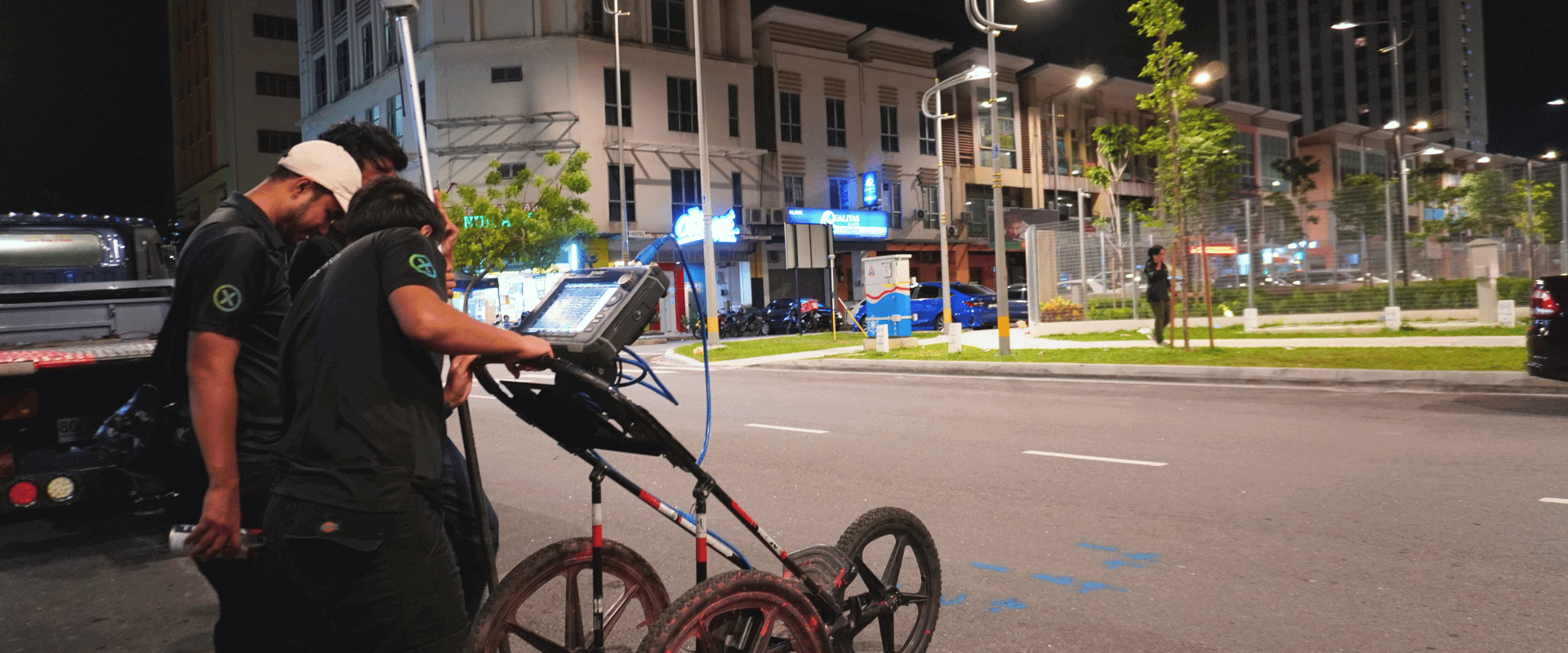
Sonicon integrates Xradar™ enhanced concrete scanning technology into forensic assessments. This allows us to map reinforcement, detect voids, cracks, corrosion, and confirm slab thickness without damaging the structure. By combining forensic expertise with NDT, we can deliver accurate insights faster, safer, and with minimal disruption to operations, providing clear, data-backed answers that protect structures today and build resilience for the future.