As buildings age or undergo changes in usage, their structural capacity may no longer meet current demands. In many cases, strengthening of existing structures becomes necessary to restore structural integrity, improve load capacity, and extend service life.
One widely used technique in structural strengthening and retrofitting is steel plate bonding, a method used in reinforced concrete repair, beam strengthening, slab reinforcement, and column strengthening.
Steel plate bonding provides a practical solution for structural upgrade, building reinforcement, and structural stabilization without the need for extensive demolition or enlargement of the existing structural member.
What is Steel Plate Bonding?
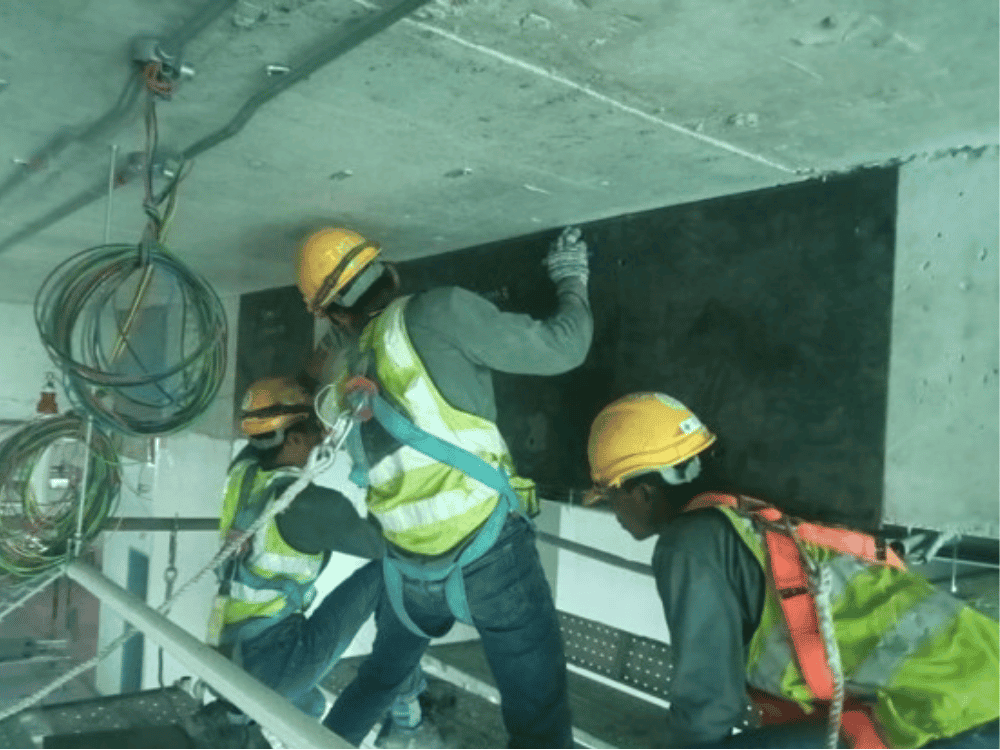
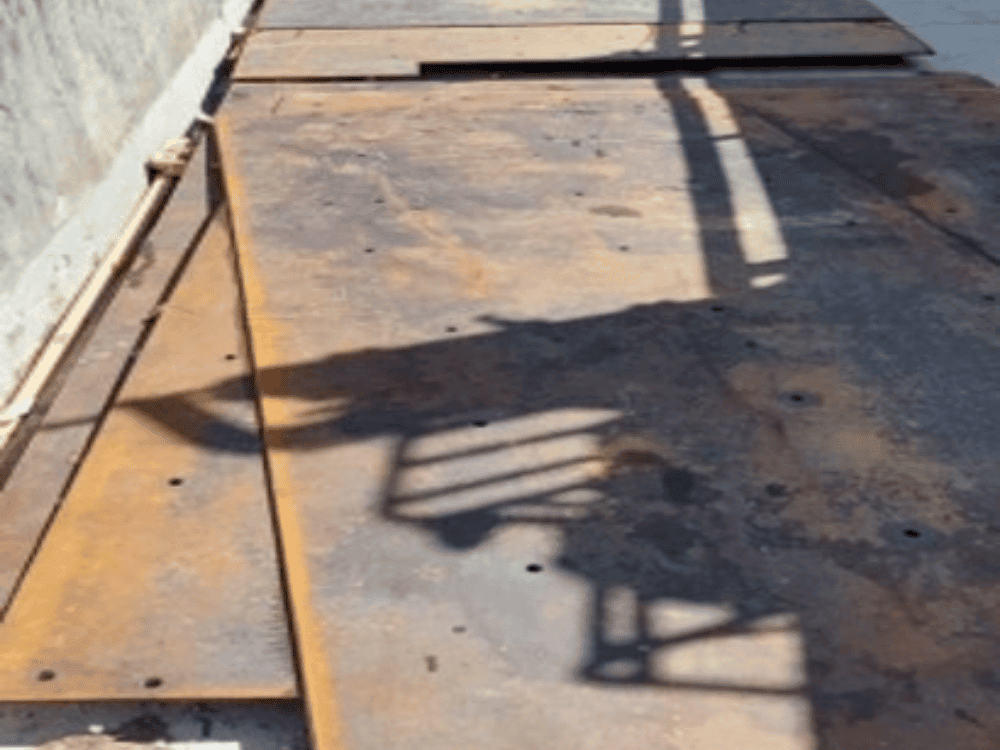
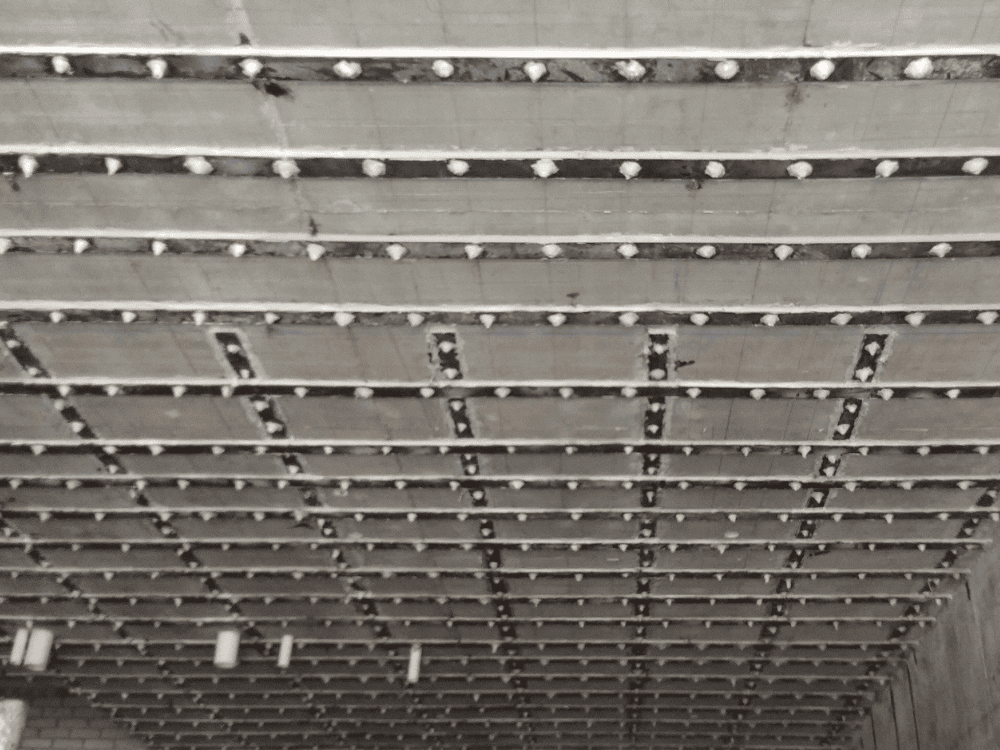
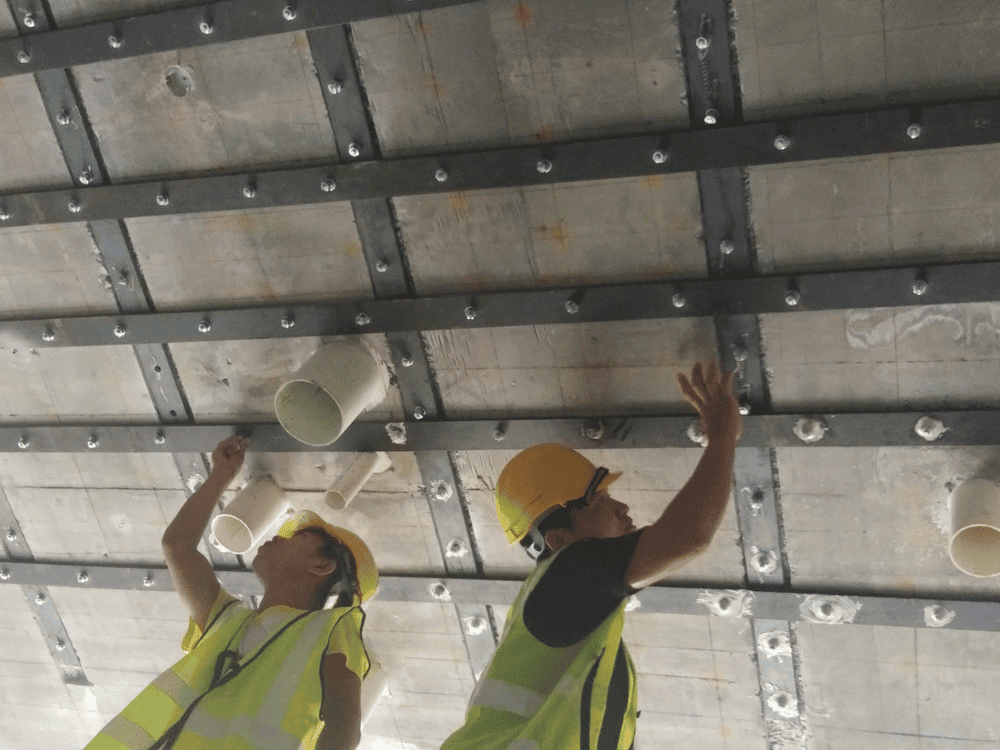
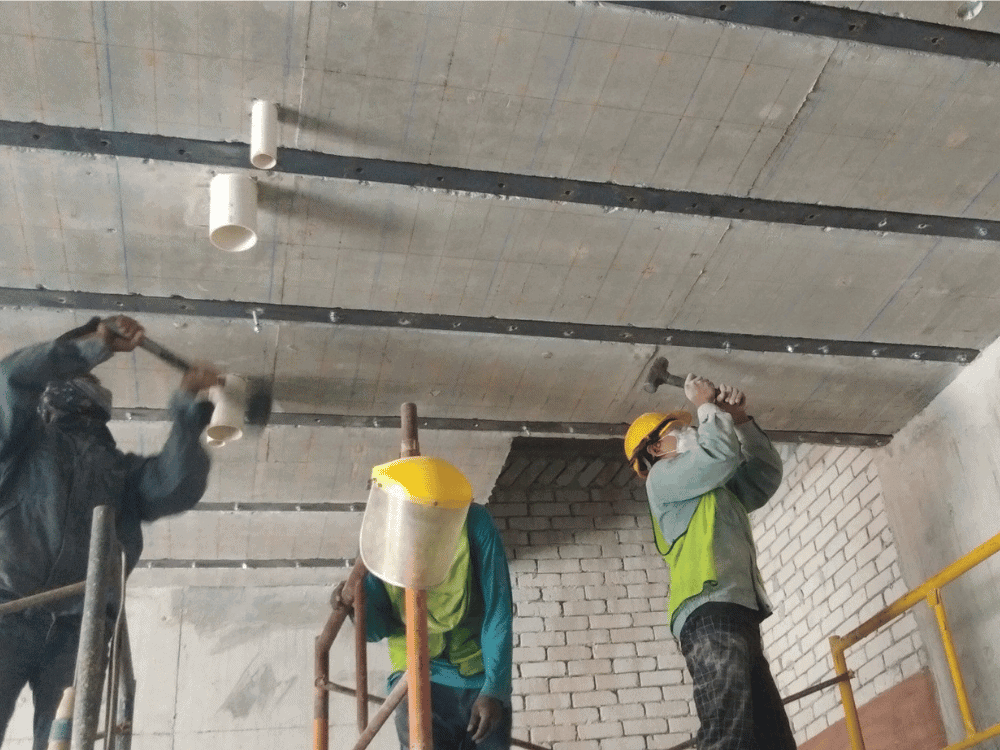
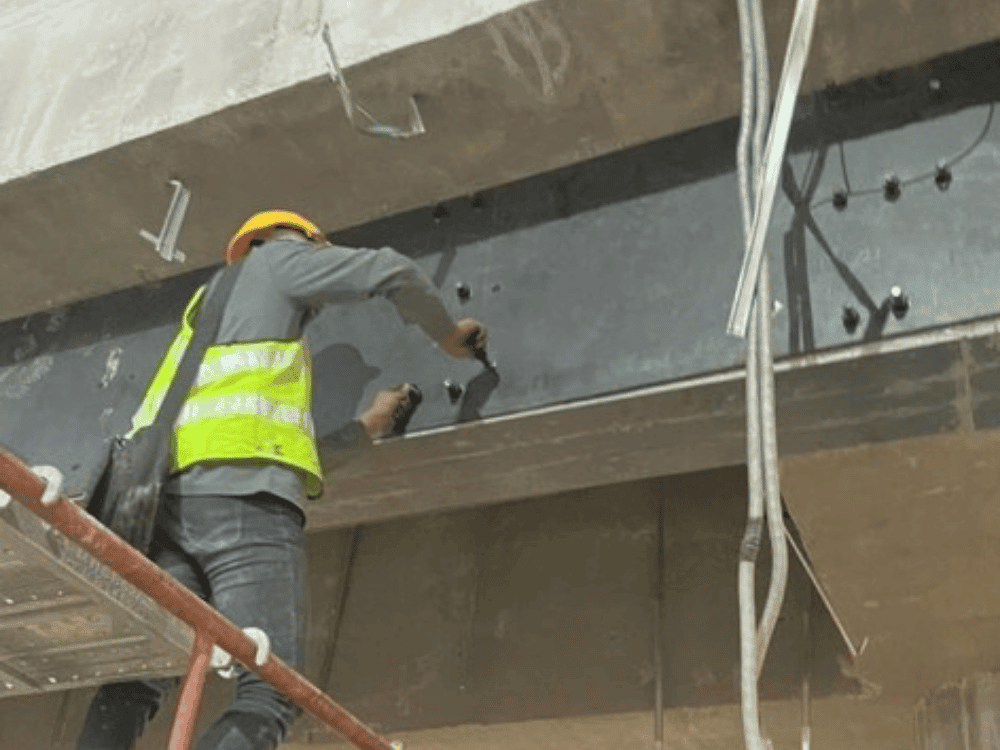
Steel plate bonding is a structural strengthening technique where steel plates are attached to reinforced concrete members using high-strength epoxy adhesives and mechanical anchors. The epoxy adhesive transfers stresses from the existing concrete member to the steel plate, allowing both materials to behave as a composite structural system.
This method is commonly applied in RC strengthening, structural retrofitting, and structural refurbishment projects where additional flexural or shear capacity is required.
Typical applications include:
- Beam strengthening
- Column strengthening
- Floor slab reinforcement
- Bridge strengthening
- Foundation strengthening
- Structural damage repair
Once bonded, the steel plate acts as additional reinforcement, increasing the load-carrying capacity of reinforced concrete slabs, beams, and columns.
Steel plate bonding is commonly used to increase flexural strength, improve crack control, and enhance the overall structural performance of concrete members.
When Steel Plate Bonding is Required
Structural strengthening may be necessary for several reasons, including:
- Concrete deterioration
- Under-designed structures
- Increase in building loads
- Change in building usage
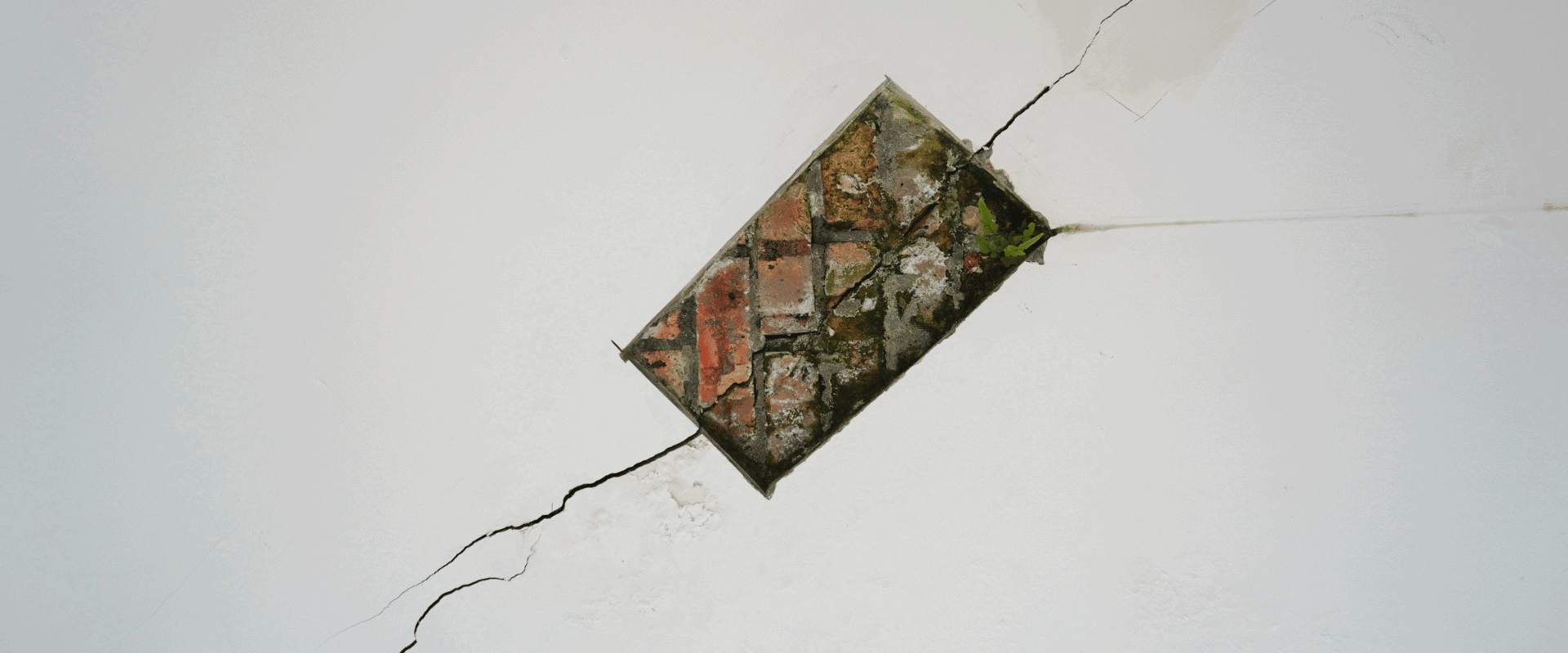
- Structural damage or cracking
- Corrosion of reinforcement
These conditions are common in structural refurbishment, concrete restoration, and structural repair projects.
Before strengthening works begin, engineers typically carry out structural assessment, crack investigation, and concrete injection repair to restore the condition of the concrete.
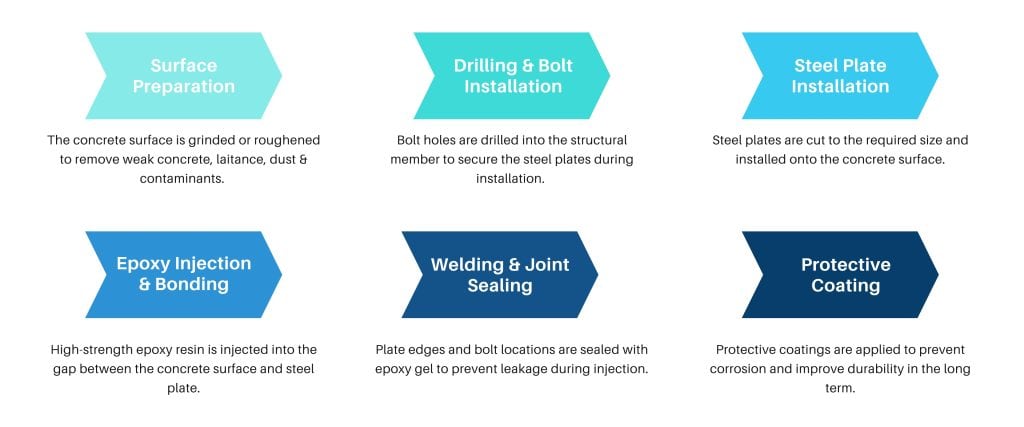
Techniques such as epoxy crack injection repair, structural epoxy injection, and injectable concrete crack repair are often performed to repair cracks and restore monolithic behaviour before steel plates are installed.
Advantages of Steel Plate Bonding
Steel plate bonding remains one of the most commonly used structural strengthening solutions due to its practical advantages.
Limitations of Steel Plate Bonding
Despite its effectiveness, steel plate bonding also has certain considerations.
- Steel plates are heavy and require careful handling
- Installation may require welding or hot work
- Long-term durability depends on corrosion protection
- Workmanship and bonding quality must be strictly controlled
Because of these factors, steel plate bonding must be designed and executed by experienced structural repair companies or concrete restoration companies.
Steel Plate Bonding
Steel plate bonding remains a reliable and widely adopted technique for structural strengthening of reinforced concrete structures. When properly designed and installed, it provides an effective solution for beam strengthening, slab reinforcement, column strengthening, and foundation stabilization.
Combined with concrete injection repair, epoxy crack injection, and structural retrofitting strategies, steel plate bonding can significantly improve structural integrity and extend the lifespan of aging infrastructure.