

The Challenge
As part of proposed upgrading works at a multinational logistics facility in Shah Alam, the client required accurate subsurface information before proceeding with any coring or modification works. The structure involved reinforced beams and hollow slabs, where undocumented reinforcement layouts or post tension elements could pose serious risks if struck. The assessment needed to be completed without disrupting ongoing operations at the facility.
Given the structural configuration, professional concrete scanning for beam and hollow slab zones was necessary to ensure safe planning and execution of the proposed works.
Our Approach & Result
We carried out non destructive concrete scanning for beam and hollow slab areas across 20 softfit locations within the building using Xradar™ enhanced concrete scanning technology. The scope focused on identifying reinforcement spacing, concrete cover, hollow slab configuration, and post-tension cable depth where present. A structured summary report was prepared after the assessment, allowing the client to review safe coring zones and flag areas requiring further approval without delay.
As part of upgrading and planning works at a multinational logistics facility in Shah Alam, We carried out non-destructive concrete scanning to verify reinforcement details within beams and hollow slab systems. Accurate subsurface information was required to support safe decision-making before any coring or modification works could proceed.
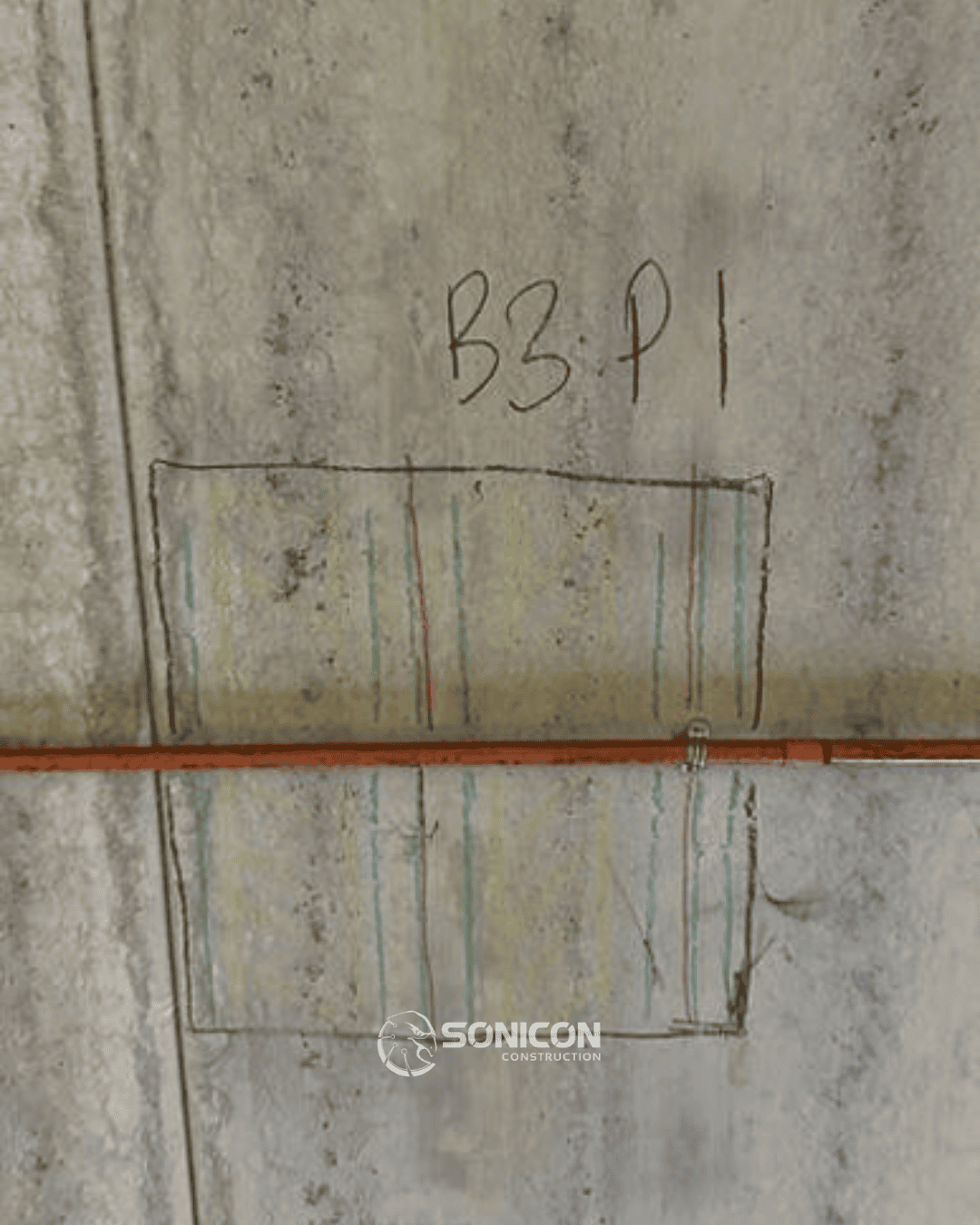
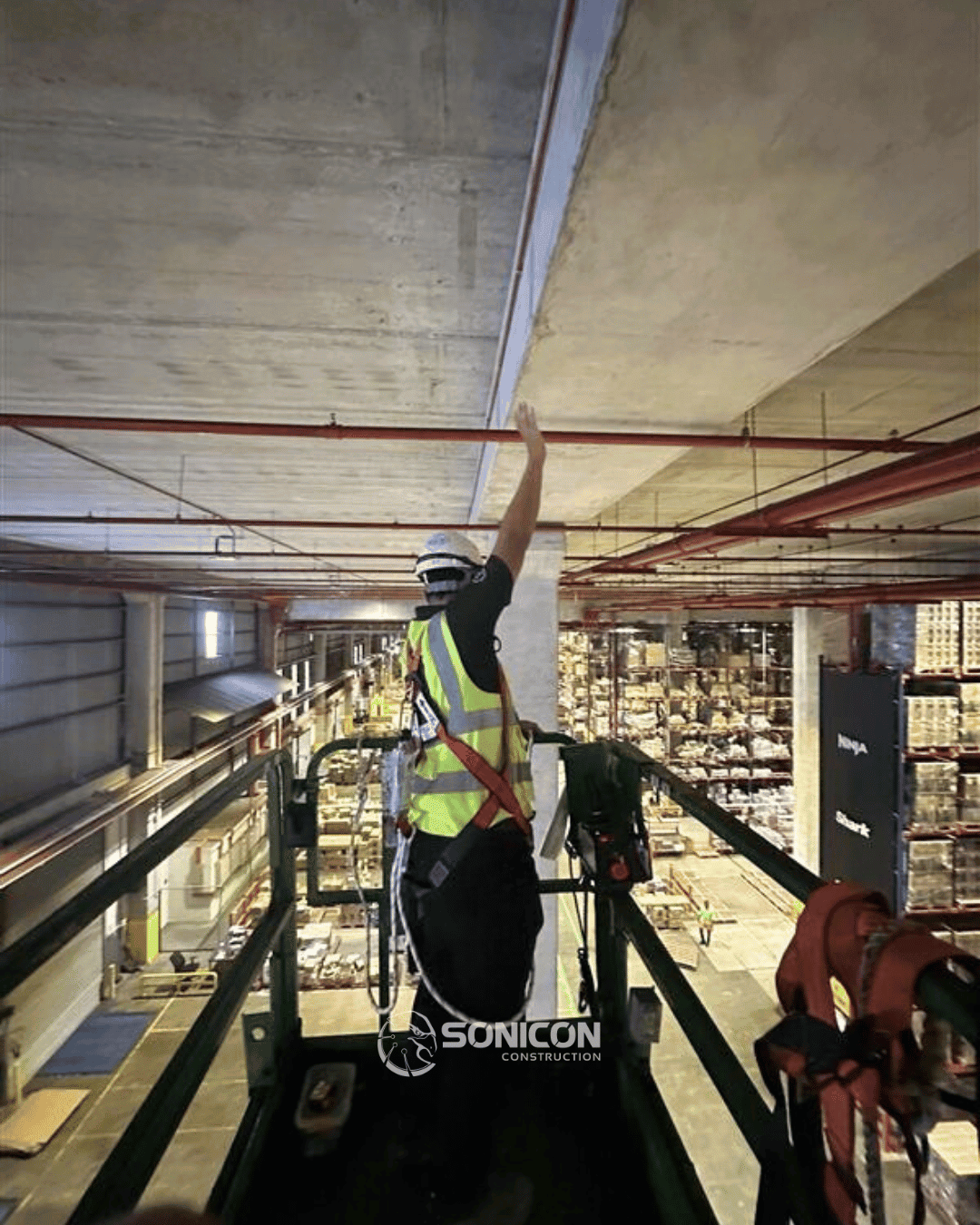
Our team assessed 20 softfit bays across the structure, focusing on beam and hollow slab zones where future works were proposed with Xradar™ enhanced concrete scanning technology. The scope involved detailed mapping of reinforcement cover, spacing, hollow core layout, and post-tension elements where present. In total, 20 softfits across 4 bays were scanned to provide a comprehensive understanding of the internal concrete configuration.
Despite the complexity of the softfit, the scanning works were carried out efficiently and safely within the live facility. Each scan provided clear identification of rebar spacing (commonly around 60–100 mm), concrete cover measurements, hollow core spacing, and post-tension cable depth where applicable. Limited-scan areas were clearly identified and flagged to ensure further approvals could be obtained before any intrusive works.
One of the key advantages of our engineers and Xradar™ was the speed of execution and reporting. Site scanning was completed within the same working day, and the findings were compiled into a structured summary report after the assessment. This allowed the client and project team to review risks, confirm safe coring zones, and plan subsequent works without unnecessary delay.
By delivering fast, accurate, and non destructive insight into the structure through concrete scanning for beam and hollow slab systems, we helped to minimise uncertainty, avoid reinforcement strikes, and support safer planning for ongoing works at the facility.


